Every spring, the hillsides of the Jerte Valley in Extremadura, western Spain, turn almost white as cherry trees burst into bloom. Orchards climb the slopes in carefully shaped terraces, and the flowers appear across the landscape like a pale blanket spread between the mountains. For a short time, this agricultural valley becomes one of Spain’s most memorable spring destinations.
 |
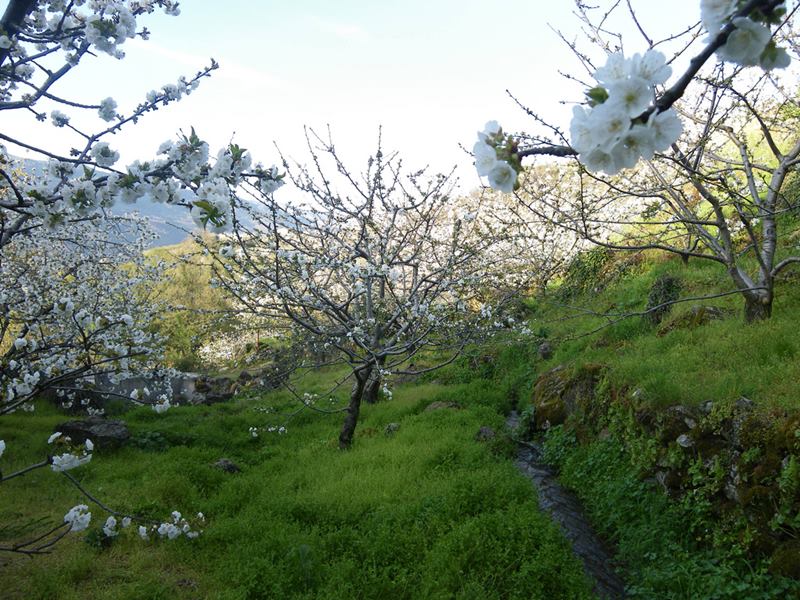
| Cherry trees bloom across the hillsides of the Jerte Valley in Extremadura, creating one of Spain’s best-known spring landscapes. |
The spectacle is not simply a display of pretty flowers. Cherry growing has shaped the valley’s landscape, villages and local economy, and the annual flowering season is celebrated with the Cherry Blossom Festival, known in Spanish as Cerezo en Flor. According to Spain’s official tourism website, the valley has around 1.5 million cherry trees, although figures can vary between sources. For travellers wondering when cherry blossoms bloom in the Jerte Valley, the usual window is from mid-March to early April, depending on the weather. The timing is never exact, which is part of the appeal: the valley changes from one spring to the next.
Where Is the Jerte Valley in Spain?
The Jerte Valley lies in the province of Cáceres, in Extremadura, an autonomous community in western Spain. It is north of the city of Cáceres and around 36 kilometres from Plasencia to the village of Jerte, according to Spain’s official tourism guide. The valley is made up of villages set among mountain slopes, orchards and the course of the Jerte River. Many visitors explore by car, stopping along the way to admire the views, walk through village streets or find a viewpoint overlooking the flowering trees.
The local tourism authority lists villages such as Valdastillas, Piornal, Barrado, Cabrero, Casas del Castañar, El Torno, Rebollar, Navaconcejo, Cabezuela del Valle, Jerte and Tornavacas. Each offers a different perspective on the valley and its farming traditions. Before setting out, check the official Jerte Valley tourism website for flowering updates and recommended driving routes.
 |
| Jerte Valley cherry blossoms |
Why Does the Jerte Valley Turn White in Spring?
The answer is the scale of its cherry cultivation. Spain’s official tourism website estimates that around 1.5 million cherry trees grow across the valley. When many of them flower at roughly the same time, the combined effect is extraordinary: white blossoms cover orchard terraces across the hillsides.
Unlike ornamental cherry displays planted mainly for their flowers, these trees are part of a working agricultural landscape. Their blossoms are the first visible stage of a crop that will later be harvested and sold. The scenery is therefore tied to the rhythm of local farming rather than to a permanent garden or landscaped park.
The flowering also varies by elevation. The valley’s own tourism authority explains that trees in lower areas tend to flower first, while trees in cooler, higher locations may bloom later. Visitors who travel through different villages can sometimes see several stages of the season on the same day.
When Is the Best Time to See Cherry Blossoms in the Jerte Valley?
The most common flowering period is mid-March to early April, but weather conditions can bring the season forward or delay it. The official Jerte Valley tourism website reported that the 2026 flowering period ran approximately from March 20 to April 3. That is a record of the 2026 season, not a guarantee for future years.
If you are planning a future visit, use these guidelines:
- Check local updates first. The official tourism site posts information when the flowering season approaches.
- Allow some flexibility. A trip planned around a single date can miss peak bloom if temperatures change.
- Explore more than one village. Different elevations mean the blossoms may not open everywhere at once.
- Consider weekdays. The local tourism authority recommends weekday visits when possible to enjoy the display more peacefully.
The official Cherry Blossom Festival information is another useful planning source. Festival events and flowering dates are related, but the flowers themselves follow the weather, not the calendar.

The Cherry Blossom Festival and the Valley’s Villages
The Fiesta del Cerezo en Flor celebrates more than the flowering trees. It brings together local culture, food, music and village traditions during the short spring season. Spain’s official tourism authority describes events such as exhibitions, tastings, open-air dances and performances by folk groups.
The festival is associated with several villages across the valley, and its programme can vary from year to year. Rather than treating it as a single event in one place, visitors can use it as an opportunity to explore the wider region. For current dates and activities, consult the official festival listing on Spain’s tourism website and the Jerte Valley’s local flowering updates. These are more reliable for trip planning than dates copied from older travel articles.
From White Blossoms to Red Cherries
Once the flowers fall, the valley’s orchards move into another stage of the agricultural year. Small green fruit develops on the trees, gradually ripening into cherries that are harvested in late spring and summer. The landscape changes again, but the orchards remain central to local life. The local tourism authority describes Cerecera as the period of cherry harvesting and related activities. It can include tastings, agricultural experiences and opportunities to learn about the valley’s produce. The exact timing of the harvest varies by cherry variety, altitude and seasonal conditions.
One product associated with the area is Cereza del Jerte, a cherry with a protected designation of origin. Visitors interested in local food can look for regional cherries and picotas, a type of cherry particularly associated with the valley. For harvest information, use the official Cerecera page. It offers a useful reminder that the valley is not just a springtime photo stop; it is a farming region whose work continues long after the blossoms disappear.

Tips for Visiting the Jerte Valley
A little preparation makes it easier to enjoy the landscape without rushing.
- Check flowering reports shortly before travelling.
- Follow local parking and traffic instructions during busy weekends.
- Use designated paths and viewpoints, and avoid damaging orchard trees or crops.
- Leave enough time to visit the villages rather than driving through the valley in one quick loop.
- If you travel during the harvest season, check which local farms or food experiences welcome visitors.
The valley can be beautiful beyond the blossom period, with orchards, mountain scenery, rivers and traditional villages offering reasons to return in other seasons. For broader travel ideas, Spain’s official tourism site also has a guide to spectacular spring blossoms across Spain.
Frequently Asked Questions
When do cherry blossoms bloom in the Jerte Valley?
They usually bloom between mid-March and early April, but the exact timing depends on weather and altitude. Check local updates before travelling.
Where is the Jerte Valley located?
The valley is in Cáceres province, Extremadura, in western Spain, north of the city of Cáceres and near Plasencia.
How many cherry trees are in the Jerte Valley?
Spain’s official tourism website gives an estimate of around 1.5 million cherry trees. Other sources may publish different figures, so it is best to describe this as an estimate rather than an exact count.
What is the Cherry Blossom Festival?
The Fiesta del Cerezo en Flor is a seasonal celebration of the valley’s cherry blossoms, local culture, food and village traditions. Its programme and dates vary by year.
Can you visit the Jerte Valley after the blossoms fade?
Yes. The cherry harvest, local food, villages, walking opportunities and mountain scenery make the region worth exploring beyond the flowering season.


 |
| After the spring blossom fades, the valley’s cherry orchards produce the fruit celebrated in local food and summer activities. |
Conclusion
The Jerte Valley’s cherry blossoms are a brief but remarkable part of Spain’s spring. For a few days, white flowers spread across orchard terraces, connecting the landscape with the work and traditions of the people who grow the fruit. The annual festival adds another layer to the experience, giving visitors a chance to discover local food, music and village life alongside the scenery.
If you are planning to see the Jerte Valley cherry blossoms in Spain, avoid relying on a fixed date from an old guide. Check the official flowering report, allow some flexibility, and explore several villages if time permits. The best visit is not only about catching the trees in bloom; it is also about seeing the living agricultural landscape behind them.
References & Sources
Article section | Anchor text | Correct official URL |
|---|---|---|
Introduction | Jerte Valley in Extremadura, western Spain | |
Number of cherry trees | Approximately 1.5 million cherry trees | |
Best time to visit | Mid-March to early April | |
Cherry Blossom Festival | Cherry Blossom Festival | |
Cherry harvest | Cerecer |

Hi,
ReplyDeleteI am coming from Marvao in Spain, would I be able to see Cherry blossom in early april 2017 at Trujilo instead of Jerte Valley as it is nearer for us? We are heading south of Spain after that.
Thank you!
Shum from Singapore