Wolfe Creek Meteorite Crater – This is the second-largest meteorite crater in the world, after Barringer Crater in Arizona. It is located in a protected area of Western Australia. This crater is the heart of Wolfe Creek Meteorite Crater National Park.

Wolfe Creek Meteorite Crater – The second-largest meteorite crater in the world in Australia
Only in 1947 were aerial photos of the Earth taken that showed the Wolfe Creek meteorite crater. Local Aboriginal people, who had known about it for many years, made the discovery of the crater possible. They consider it sacred and have a legend about its origins. According to legend, a snake emerged out of this crater. This snake is considered one of the patrons in the world.
Wolfe Creek Crater measures 875 metres in circumference and has a flat bottom that is approximately 55 metres below its rim and 25 metres below the sandy plain. It weighed about 17,000 tonnes and is less than 120,000 years old. The ground rises slightly in the middle of the crater. Trees of astonishingly large size grow here. They draw moisture from the crater’s water reserves, which accumulate after summer rains. It is second in size to the Arizona crater.
According to native legends, the name of the crater means "the stone of a shining sunny day." It was formed by a meteorite falling three hundred years ago. Although the original depth of the crater was 120 metres, it has decreased in depth to between 50 and 60 metres over time due to natural forces, such as wind blowing the sand nozzle of the caldera. The crater is still very well preserved due to its dry climate. The crater's earth is extremely deformed at the moment. It has an unusual composition of different rocks and is filled with space debris. Meteorite fragments litter the western slope of Wolfe Creek. There are also fragments of an Iron meteorite found near the crater.
Like the park, the crater is located in Western Australia near the border with the Great Sandy Tanami Desert. To get closer to the crater, visitors must climb to a high point and then descend to 50 metres. The park's administration has many lovely places to picnic, barbecue, have simple get-togethers, or just take a leisurely walk.
First Image Source | Flickr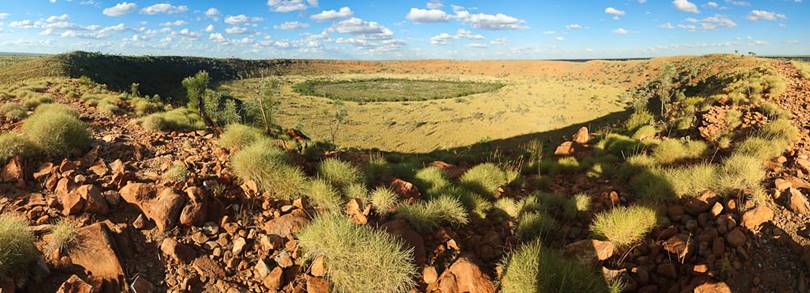


No comments:
Post a Comment