Most wells are places where people go to collect water. The Tuhala Witch’s Well in Estonia has a rather different reputation. Every so often, usually during spring flooding, water suddenly rises through the well and spills over its wooden cover. For a while, the quiet countryside around Tuhala appears to have a well that is "boiling".
 |
| Tuhala Witch’s Well overflows during a spring flood in Estonia, creating the unusual “boiling” effect associated with the site. |
The explanation is not supernatural, but the sight is unusual enough to keep the old legend alive. The well is connected to the underground waterways of the Tuhala karst area, where rising groundwater can force water upward through the spring. During a major flood, as much as 100 litres of water can flow over the wellhouse every second. (Visit Estonia)
The witches, naturally, have their own explanation.
What Is Tuhala Witch’s Well?
The Tuhala Witch’s Well is a natural spring located at Sulu Farm in the Tuhala karst area of Estonia's Harju County. It is part of the Nabala-Tuhala Nature Reserve, a protected landscape containing underground rivers, springs, sinkholes, caves, and other karst formations.
The well itself is about 2.4 metres deep. Under normal conditions, it looks like an ordinary old well. Its extraordinary behaviour is only apparent when water levels rise sufficiently in the surrounding underground karst system. That makes the name “Witch’s Well” particularly fitting. A visitor can stand beside it on an ordinary dry day and see nothing remarkable. Then, after enough rain or snowmelt, the water can surge upward and flow over the top.
Where Is Tuhala Witch’s Well?
The well is in Sulu, Kata village, Kose Parish, Harju County, Estonia. It lies in the Tuhala karst landscape, roughly 40 kilometres from Tallinn according to local tourism information. The surrounding area is worth seeing for more than the well itself. The Tuhala karst field contains springs, sinkholes, caves and underground streams. The Tuhala River runs for about 26 kilometres, with approximately six kilometres flowing underground through several channels. The Nabala-Tuhala Nature Reserve information gives a useful overview of the wider protected landscape and its importance.

Why Does Tuhala Witch’s Well Overflow?
The answer lies underground. Tuhala sits in a karst landscape, where groundwater moves through channels and cavities in soluble limestone. The protected-area authorities explain that the Tuhala karst field contains underground streams, springs, caves, sinkholes and other formations created by groundwater movement.
When heavy rain and melting snow send large amounts of water into the system, the underground river rises. The pressure changes throughout the karst network, and eventually water is forced upward through the spring beneath the Witch’s Well. The effect can be dramatic. The well begins overflowing, sometimes sending water across its wooden cover and surrounding ground. Estonian tourism information says the well can overflow at approximately 100 litres per second, while the Tuhala Nature Centre notes that this phenomenon occurs when the Tuhala River's flow reaches roughly 5,000 litres per second.
The Underground River Is the Key
The Tuhala spring is not an artesian well that simply produces water because of some mysterious pressure trapped underground. The explanation is linked to the area's underground river and karst drainage system. Tallinn University has also explained the phenomenon scientifically, describing how increased groundwater pressure in the Tuhala karst system can push water upward through the spring beneath the well. So when the Tuhala Witch’s Well appears to "boil", what is really happening is a remarkable demonstration of groundwater moving through a complicated limestone landscape.

Why Does the Well Appear to Boil?
The word “boil” is part of the story, but the water is not actually boiling. During an overflow, water rises through the well and rushes across the surface, creating a lively, bubbling appearance. From a distance, it can look as if the well itself has suddenly boiled.
That appearance connects the scientific phenomenon to the centuries-old folklore surrounding the site. The official Visit Estonia description of Tuhala Witch’s Well also uses the idea of the well “boiling” while clearly explaining that the event is caused by the underground river and spring flooding.
When Does Tuhala Witch’s Well Flood?
There is no guaranteed annual date for the phenomenon. The Tuhala Witch’s Well usually overflows during spring floods, when snowmelt and precipitation increase the amount of water moving through the karst system. The exact timing depends on weather and groundwater conditions. The event can be surprisingly brief or continue for a much longer period. Visit Estonia says an individual episode can last anywhere from one day to three weeks. That unpredictability is part of the attraction. People cannot simply arrive on an arbitrary spring morning and expect to see the water flowing. The natural conditions have to be right.

The Legend Behind the Witch’s Well
Science explains the water. Folklore explains the name. According to Estonian tradition, the witches of Tuhala gather in an underground sauna and beat themselves with birch branches. When they become especially active, the Witch’s Well is said to begin "boiling".
It is a charming story, especially when told beside a perfectly ordinary-looking well that can occasionally erupt with water. The legend should be understood as folklore rather than an explanation of the hydrology. The real event comes from the Tuhala karst system. Yet the traditional story has become an important part of the identity of the place.
Tuhala Witch’s Well and the Nabala-Tuhala Nature Reserve
The Witch’s Well is part of a much larger protected environment. The Nabala-Tuhala Nature Reserve covers 4,628.7 hectares and contains extensive karst areas with eight underground rivers, together with valleys, springs, sinkholes, temporary water bodies and other habitats.
The hydrology of the area also supports sensitive wetlands and spring-fed habitats. The Environmental Board notes that these environments can provide habitat for protected and endangered species and are particularly sensitive to changes in drainage and groundwater conditions. This puts the famous well in perspective. Its unusual flooding is not an isolated trick of nature; it is part of a much larger underground water system.

How Deep Is Tuhala Witch’s Well?
The well is approximately 2.4 metres deep. That may seem modest compared with many traditional wells, but its depth is not what makes the site remarkable. The unusual feature is the way water can suddenly rise and overflow through it when the surrounding karst system reaches high-water conditions.
What Makes Tuhala Witch’s Well So Unusual?
The answer is a combination of three things: karst geology, unpredictable spring flooding, and folklore. On an ordinary day, Tuhala Witch’s Well is simply part of an old rural landscape. During a major spring flood, underground water pressure transforms it into a temporary fountain. At the same time, an old Estonian legend provides a wonderfully memorable explanation for what visitors are seeing.
Estonians even chose the Tuhala Witch’s Well as the Estonian Wonder of 2012, according to Visit Estonia. The phenomenon is therefore both scientific and cultural: limestone and groundwater provide the mechanism, while folklore provides the story.

Frequently Asked Questions
What is Tuhala Witch’s Well?
Tuhala Witch’s Well is a natural spring in the Tuhala karst area of Estonia. It can overflow during periods of high water, when groundwater pressure rises within the underground river system.
Where is Tuhala Witch’s Well located?
It is located at Sulu Farm in Kata village, Kose Parish, Harju County, Estonia, within the Nabala-Tuhala Nature Reserve.
Why does Tuhala Witch’s Well overflow?
The overflow occurs when high water levels in the Tuhala karst system increase underground pressure, forcing water upward through the spring beneath the well.
When does Tuhala Witch’s Well flood?
It usually happens during spring floods, particularly when snowmelt and heavy precipitation raise water levels. The event does not occur on a fixed annual schedule.
Why does the well appear to boil?
Fast-moving water surges through the well and spills across its cover, creating a bubbling appearance. It is an effect of flowing groundwater, not boiling water.
How deep is Tuhala Witch’s Well?
The well is approximately 2.4 metres deep.
How much water can flow from the Witch’s Well?
During a major overflow, up to about 100 litres per second can flow over the wellhouse.


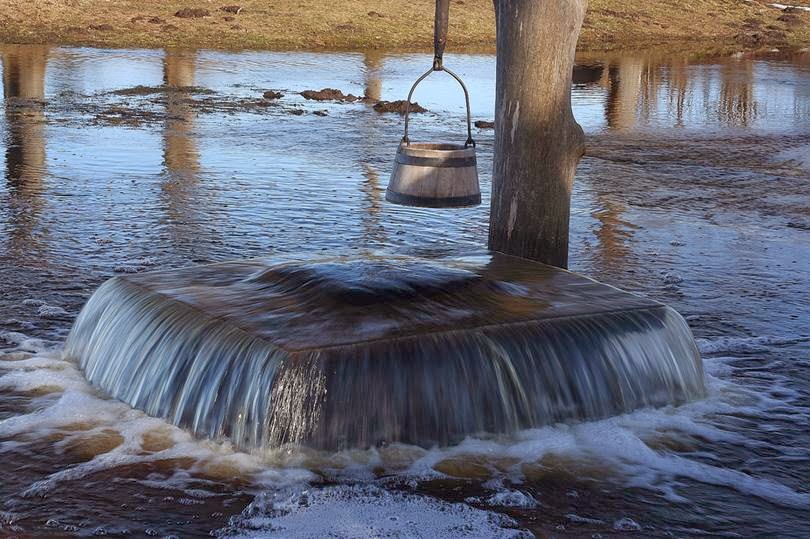 |
| Rising groundwater forces water through Tuhala Witch’s Well and over its wooden cover during the spring flood. |
Tuhala Witch's Well Location Map
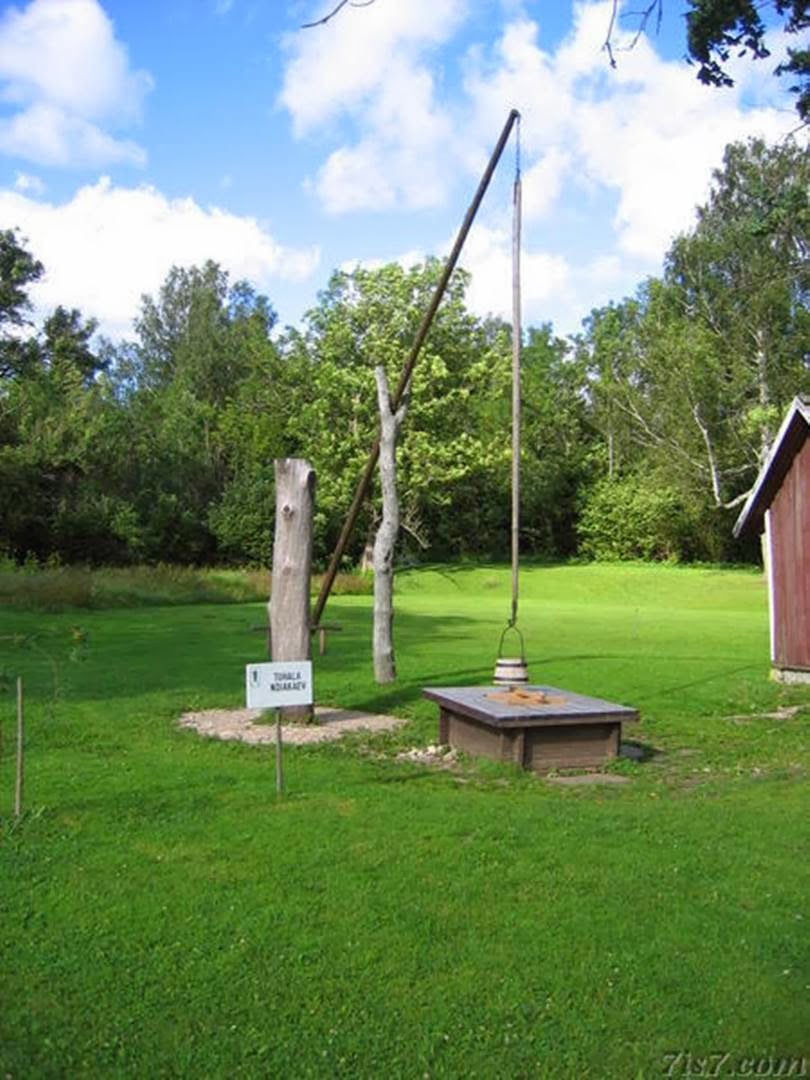 |
| Tuhala Witch’s Well in Estonia is a karst spring that can overflow dramatically during spring floods. Discover the science, folklore, and unusual history behind it. |
Conclusion
The Tuhala Witch’s Well does not need magic to be extraordinary. Its secret is hidden beneath the surface, in Estonia's limestone karst landscape, where rivers disappear underground, and groundwater follows channels that cannot be seen from above. When the spring floods fill the water to a level high enough, the pressure forces the water up through the well, creating the spectacular sight that has mystified visitors for generations.
The witches belong to folklore, but the overflowing water is very real. Perhaps that is what makes Tuhala so memorable. A scientific explanation has taken nothing away from the story. Standing beside the well while water rushes over its wooden cover, it is easy to understand why people once imagined that something mysterious was happening beneath the ground.
References & Sources
- Official Visit Estonia: Information about the Witch’s Well
- Official protected-area information
- Official information about the karst system and Witch’s Well
- University explanation of the geological and hydrological process

No comments:
Post a Comment