On Sweden’s western coast, there are places where the landscape feels almost too perfect to be real. Smögen is one of them. Bright wooden boathouses sit beside the water, small fishing boats fill the harbour, and smooth granite rocks rise around the village. The colourful waterfront is one of the most recognisable sights in Bohuslän, in Västra Götaland County.
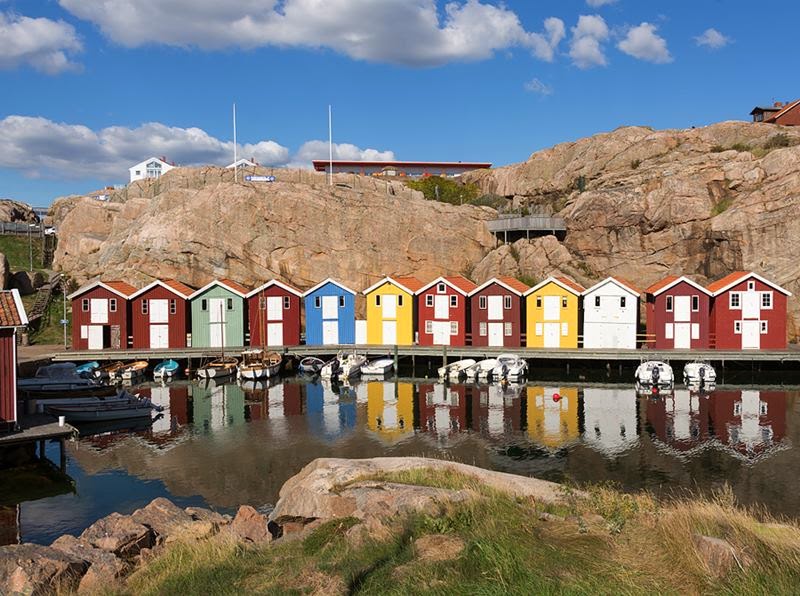 |
| Colourful wooden houses line the waterfront in Smögen on Sweden’s west coast. |
Smögen is best known for Smögenbryggan, its long waterfront boardwalk, where colourful boathouses, restaurants, cafés and small shops face the harbour. But behind the postcard-like scenery is a much older story. Smögen grew as a fishing community, and the sea shaped almost every part of its development.
Where Is Smögen?
Smögen lies on Sweden's Bohuslän coast, in Västra Götaland County. Bohuslän extends along the country's western coastline from the area around Gothenburg toward the Norwegian border. The region is renowned for its rugged coastline, thousands of islands and skerries, fishing villages, and smooth granite formations. Visit Sweden describes the Bohuslän archipelago as containing around 8,000 islands and skerries, making it one of Sweden's most distinctive coastal landscapes. Smögen sits within this landscape, surrounded by the sea and rocky coastal terrain.
A Village Built Around the Harbour
Smögen's location was important long before tourists began arriving to photograph its colourful houses.
According to historical material published by Sotenäs Municipality, the settlement developed around the sheltered water between Smögen Island and Kleven. For centuries, the community remained closely connected with fishing and fish processing. During major herring-fishing periods in the 19th century, Smögen expanded considerably and became one of Bohuslän's leading fishing communities. The harbour was, therefore, not just a picturesque backdrop but also the centre of everyday life. The harbour was the centre of everyday life.
 |
| Brightly painted boathouses create one of Smögen’s most recognisable waterfront scenes. |
Why Are Smögen's Houses So Colourful?
From Working Buildings to Famous Landmarks
 |
| Smögenbryggan follows the harbour past colourful buildings, boats, cafés and shops. |
Smögenbryggan and the Colourful Waterfront
Why the Waterfront Looks So Photogenic
Smögen's appeal lies in its contrast. The wooden buildings add colour to the scene. The harbour provides reflections. Fishing boats add movement, while the surrounding granite provides the scene with a rugged edge. There is also a natural sense of depth. Looking down the boardwalk, the buildings seem to follow the curve of the water toward the open coast. That combination explains why photographs of Smögen's colourful houses are so often associated with the west coast of Sweden.
Smögen's Long Fishing History
The village's beauty should not hide its working-class maritime past. Sotenäs Municipality's historical account explains that fishing and fish handling were central to Smögen's development. During the peak herring-fishing period, the local economy expanded, and builders erected large herring warehouses around the harbour. In 1919, Smögen saw the opening of a fish auction, and fishing continued to be the settlement's most important industry well into the 20th century.
This history is still visible in the waterfront landscape. Boats, harbours, seafood restaurants, and old fishing buildings all connect modern Smögen to the community that existed before it became a popular summer destination.
Seafood Is Still Part of the Experience
The fishing heritage also explains why seafood is such an important part of visiting the Bohuslän coast. The region is known for prawns, oysters, mussels, lobster, and other seafood. Visit Sweden describes the west coast as a major destination for seafood experiences and highlights Smögen as one of the key stops along the coast. For visitors, this means they can explore Smögen beyond just sightseeing. The local food culture is another way to experience its relationship with the sea.
 |
| Traditional wooden buildings add character to Smögen’s busy coastal waterfront. |
Smögen and the Rocky Bohuslän Coast
The colourful buildings would not look the same without their surroundings. Bohuslän is renowned for its smooth granite rocks, narrow waterways, and scattered islands. The coastline has a distinctly rugged appearance compared with many of Sweden's softer sandy shores. Visit Sweden describes the region as a landscape of fishing villages, red boathouses, and smooth rock formations, surrounded by an extensive archipelago. In Smögen, the combination is particularly striking: bright wooden buildings stand directly beside a landscape shaped by wind, water and rock.
A Different Picture of Sweden
Smögen reveals a side of Sweden that is easy to overlook. Instead of forests and inland lakes, saltwater, fishing boats, granite, and small coastal buildings dominate the scenery here. It feels distinctly Scandinavian, but not in the way of a traditional red cottage in the countryside. This is a maritime Sweden shaped by the North Sea and generations of fishing.
When is the best time to visit Smögen?
Summer is the busiest period, and for good reason. The long days, open restaurants, and lively harbour make the village particularly attractive. But Smögen is not only a summer destination. Visit Sweden notes that although Smögen can become busy during peak summer, the area has year-round appeal. Autumn brings a quieter atmosphere and is closely associated with the beginning of the lobster season. For photography, early morning can offer quieter streets and softer light. Evenings can be equally beautiful, with sunlight catching the colourful buildings and the harbour.
Why Smögen's Colourful Houses Are So Special
The famous houses of Smögen are unimpressive because they are neither enormous nor architecturally elaborate. Their charm comes from something much simpler. They belong to the landscape. The colourful wooden buildings, working harbour, rocky coastline, and fishing history all fit together. Remove the sea, and the village would feel different. Remove the old boathouses, and it would lose much of its character. That is what makes Smögen's colourful houses so memorable.
Colourful Houses in Smögen: A Charming Fishing Village on Sweden’s West Coast
 |
| The colourful buildings create beautiful reflections in the calm harbour waters. |
 |
| A row of brightly painted houses stands beside the harbour in Smögen. |
 |
| Colourful waterfront buildings and fishing boats reflect Smögen’s maritime heritage. |
 |
| Colourful wooden houses contrast with the rugged granite coastline of Bohuslän. |
 |
| Colourful wooden buildings surround the picturesque harbour at Smögen. |
 |
| The famous Smögenbryggan boardwalk offers views of the waterfront houses. |
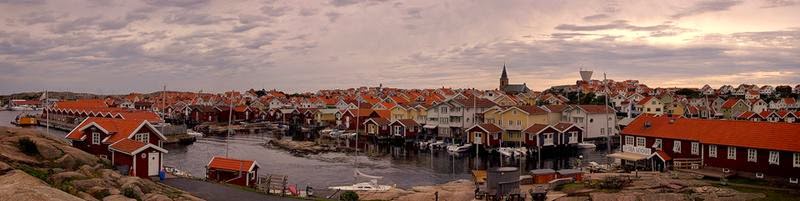 |
| Brightly painted houses and boats provide Smögen with its distinctive coastal character. |
Conclusion:
The colourful houses in Smögen are more than just a beautiful collection of waterfront buildings. They are part of a coastal community that has tied its history to fishing, trade, and the sea for generations. Today, visitors come to walk along Smögenbryggan, photograph the colourful boathouses, enjoy seafood and explore the rocky coastline. Yet the old character of the fishing village remains visible beneath the modern tourism. Set against the granite landscape of Bohuslän on Sweden's west coast, Smögen offers one of the country's most distinctive coastal scenes—a place where bright wooden houses meet the sea and centuries of fishing history remain part of everyday life.
You may like these ››
- Five Flower Lake → Jiuzhaigou
- Moon Bridge Taiwan → Discover the Beautiful Bridge at Dahu Park
- Glass Beach California → The Fascinating Sea Glass Beach of Fort Bragg
- Ginnie Springs → The clearest springs in Florida
- Rainbow Eucalyptus Tree → Eucalyptus deglupta
References & Sources
- Sotenäs Municipality — historical information about Smögen's development, fishing industry, harbour, buildings and tourism history.
- Visit Sweden — Bohuslän's geography, fishing villages, red boathouses, granite coastline and Smögen.
- Visit Sweden – Swedish Archipelagos — information about the Bohuslän archipelago and its islands, fishing villages and coastal landscape.
- Visit Sweden – West Coast Seafood Road Trip: Smögenbryggan, colourful boathouses, shops, cafés and the local seafood culture.
- Visit Sweden – West Sweden Restaurants — information about Smögenbryggan and its approximately one-kilometre-long waterfront boardwalk.
No comments:
Post a Comment